
Escape rooms have a fascinating (if rather short) history, spanning from text-based adventure games in the 1980s to the complex, commercial endeavours of today.
Contents
Escape The Room Computer Games
Evolving Generations of Escape Rooms
Escape Rooms in the Mainstream
Disaster and Escape Room Industry Regulation
Escape Rooms in the COVID Pandemic
Escape The Room Computer Games
Long before live escape rooms were a thing, there existed dozens of computer games which took as their central conceit a character trapped within a single small room, with a series of increasingly fiendish puzzles in between them and freedom.
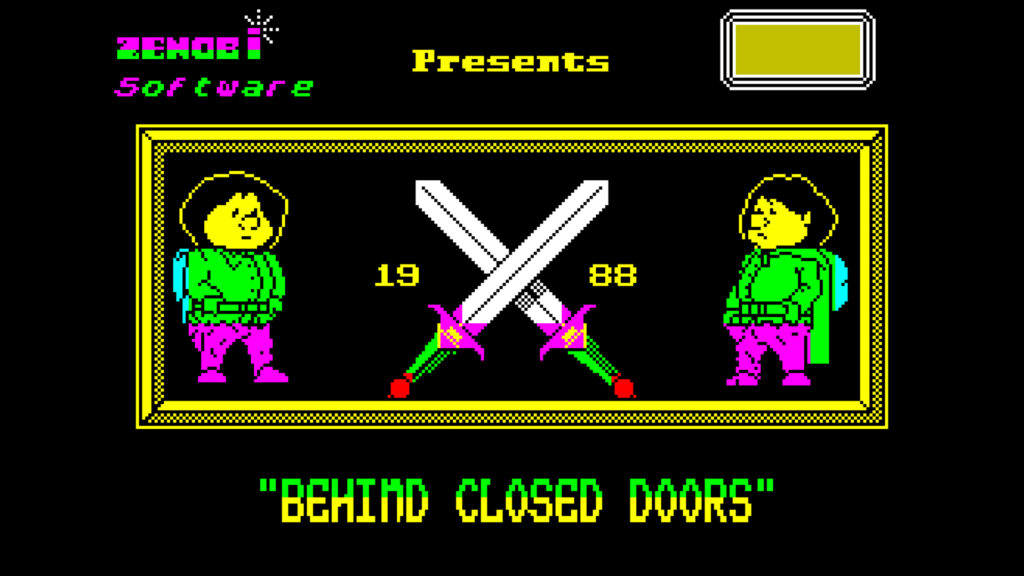
You can trace these back as far as 1988, when John Wilson created his text adventure game Behind Closed Doors for the ZX Spectrum. In this short adventure a Balrog – stricken by an upset stomach after one too many cat vindaloos – finds himself locked inside a dingy restroom by some mischievous goblins.
This experience may look pretty basic by today’s standards, but for a time when computers had less memory than the average blender it was nothing to be sniffed at.
As Flash became more popular, graphical escape games which riffed on the same mechanic soon gained in popularity. Many of these were fairly simple, browser-based diversions which could be completed in a matter of minutes, and which had little in the way of story or logic to string them together.
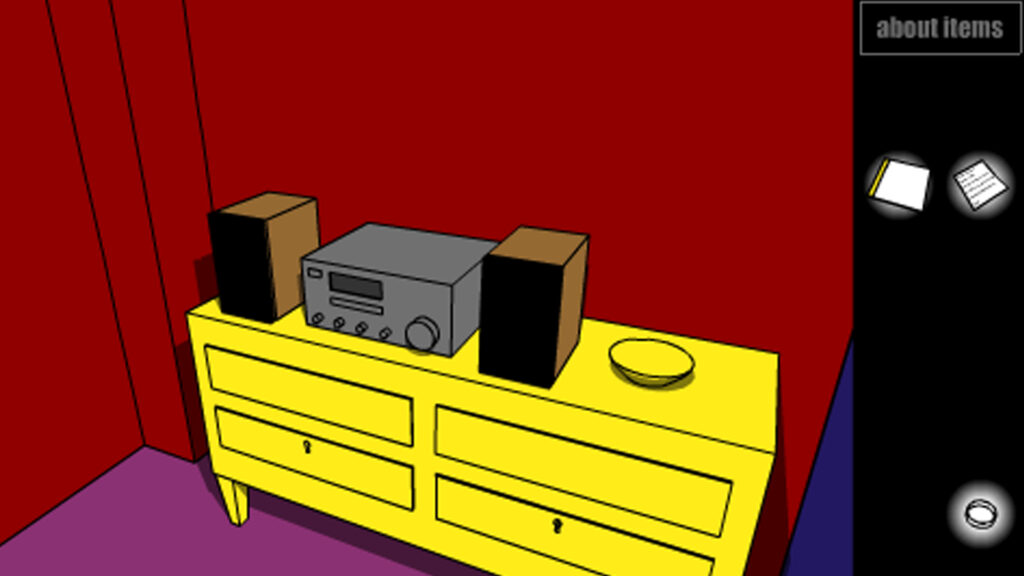
Crimson Room and Viridian Room are classic examples – both of them are bizarre, simplistic and yet also infuriatingly obtuse. Which isn’t to say they aren’t still fun in a teeth-grinding, keyboard-smashing kind of way.
Mystery Of Time And Space also deserves a mention – although it breaks the mould a little by not confining itself to a single room.
From these humble beginnings, escape room computer games exploded in popularity… to the point that the sheer quantity of them soon warranted a game titled Another Goddamn Escape The Locked Room Game.
The First Live Escape Rooms
Takao Kato, a worker at the Japanese publishing company SCRAP, is credited with being the first person to conceive of a live action, real-world escape game in 2009. Like all good ideas, it was had while slacking off and playing browser-based games during working hours.

Kato, the story goes, watched one of his co-workers complete a classic escape room game and questioned why something similar couldn’t be rendered in the real world.
In an interview with The Japan Times he expressed it thus: “I wondered why interesting things didn’t happen in my life, like they did in books. I thought I could create my own adventure, a story, and then invite people to be a part of it.”
Soon enough Kato put this plan into action. The games he devised were a little different from what we might today recognise as an escape room, however. Called Real Escape Games, they tended to run for several weeks at most, and were based in bars or clubs, rooms of which were temporarily repurposed for the run.
Each game lasted about an hour, but could have as many as twenty participants, who were often divided into teams to try and plot their escape – a feat which might involve passing an exam, ousting a traitor in their midst, or even turning back time.
Real Escape Games were an instant hit, with tickets for each new adventure selling out in a matter of hours. It wasn’t long before competitors started to take notice and organise events of their own.
By 2011, the concept had made the jump overseas. Parapark – a company founded by team building expert Attila Guyrkovics – was established in Budapest, and constituted one of the first permanent escape game venues.

Situated in the basement under a ruin bar, it was designed to help visitors flex their teamwork muscle, while also plunging them into a pleasant state of flow. Guyrkovics put a lot of energy into that last point, adamant that his puzzles should be neither too easy nor too hard.
It was a winning recipe, and within two months he had quit his day job and was focussing solely on Parapark. As rivals popped up across the city, Guyrkovics turned his venture into a franchise – one that is still going strong today.
Escape Rooms Go Worldwide
It took another year or so for escape games to make their way to America, but the concept caught on after Real Escape Games set up a venue in San Francisco in 2012. The first American escape game company – Puzzle Break – was established in Seattle the very next year.
HintHunt, the company credited with bringing escape rooms to the UK, was slightly quicker off the mark, opening a venue in London in 2012. Meanwhile, the floodgates now having been opened, rooms appeared in Australia, Singapore, Russia, and pretty much every country in Europe.
Evolving Generations of Escape Room
As escape rooms became more widespread and more established, the norms and standards of this new genre of playable experience evolved. Escape room enthusiasts mark the changes by describing rooms in terms of different “generations”.
Generation One rooms were generally quite basic. They consisted of puzzles in a minimally-decorated room with no specific story or theme to string them together. These games closely mimicked the online games such as Crimson Room that had inspired them.
Generation Two rooms added narrative. Puzzles would follow a logical progression and rooms would often have a specific theme that would be reflected in its decoration and design. Some rooms used special effects or actors to enhance the experience.
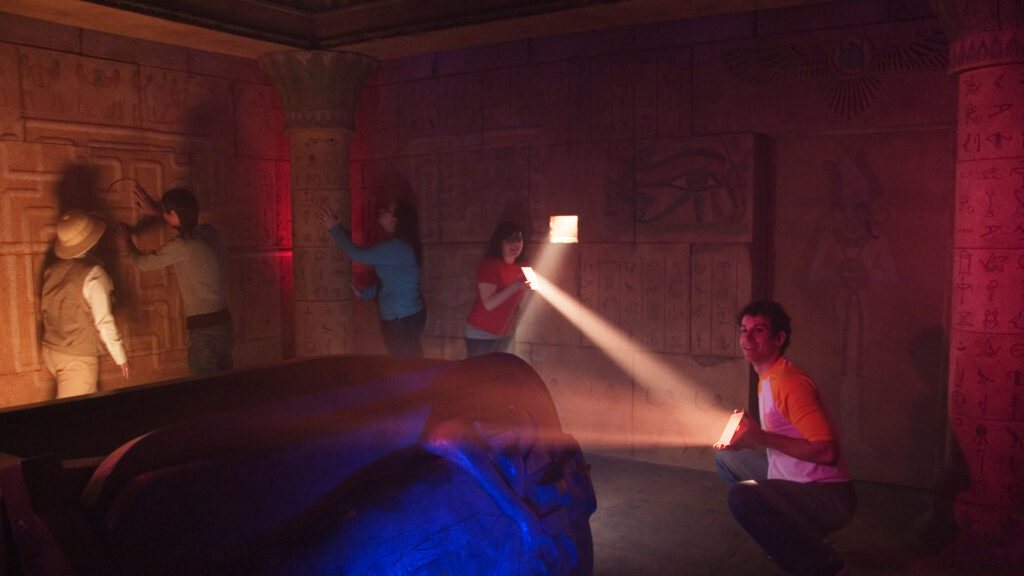
Generation Three rooms featured improved technology. Until this point puzzles had revolved around padlocks and combination locks. Now rooms began using magnetic locks and purpose-built props to create a more immersive, technical experience.
Enthusiasts debate the existence of Generation Four rooms, but where they are posited they involve rooms that are completely immersive, using no technology at all that would be out of place in the narrative of the game.
Escape Rooms in the Mainstream
In the late 2010s, escape rooms became much more common. Facilities proliferated, with many chains replicating rooms across different cities, while independents offered more bespoke experiences.
Escape rooms were studied by academics, including notable work by Dr Scott Nicholson of Wilfrid Laurier University in Brantford, Ontario. He wrote a survey of escape room facilities, and several defining papers examining and categorising the field.
In addition to this, escape room movies began cropping up. A lot of them. The basic concept of “a group of characters go to an escape room but it turns out to be real/deadly” proved an irresistible one. At least four movies titled Escape Room were made, with the most successful being Escape Room (2019).
Unique Escape Room Variations
During this time some truly creative variations on escape rooms began to appear. Escape rooms around the world experimented with themes like:
- Players starting blindfolded/restrained
- Large-scale multi-room “escape houses”
- Rooms with live actors
- Rooms with virtual-reality component
The success of escape rooms also paved the way for other immersive experiences, including labyrinths like Meow Wolf and Doloris Meta Maze.
Disaster and Escape Room Industry Regulation
In January 2019, a fire broke out in an escape room venue in the city of Koszalin in Poland. Five players – all teenage girls – were locked inside a game room at the time. All of them perished in the fire, and one employee of the venue was severely burned.

This horrifying tragedy made headlines around the world, and prompted a sweeping wave of reform. Up until this point escape games (a relatively new phenomenon) had operated in a kind of legal grey area in many countries. There was no specific regulation to address them, and so they had been able to do as they pleased – including actually locking players inside rooms.
That now changed. Rapidly. Governments pushed a program of inspection and regulation that made it illegal, in many countries, to actually lock the main exit from a given room. This disaster caused the escape game industry, in many ways, to mature and formalise. It marked, with horrible tragedy, a step-change in the way escape games operated.
Escape Rooms in the COVID Pandemic
At the height of the escape room boom, the world changed. The COVID pandemic of 2020 resulted in a series of lockdown restrictions in most countries that prevented people from participating in in-person, indoor or group activities. This was bad news for escape room businesses.
However, it wasn’t the end of the road.

Many escape rooms pivoted to offer their rooms via an “avatar” – usually a game master holding an iPad, who would show you around the room and then follow your instructions over Zoom or Skype.
It was an imperfect solution, but it was also very charming, and allowed escape room enthusiasts to virtually play rooms that they would likely never have travelled to play in person otherwise.
Virtual escape rooms lasted for around a year, before escape room venues could open up to the public again. Virtual play was a lifeline that allowed many businesses to survive what would otherwise have been a fatal emergency.
The Present Day
And that brings us to the present day. Escape rooms are now more popular than ever. What started as a niche experiential activity has become somewhat mainstream, and paved the way for a growing trend towards immersive, real-world experiences.
What’s next? We’ll have to wait and see…